A Low-Key Swap Afternoon, Planned Around What Is Already Available
Plan a low-key swap afternoon with borrowed tables, clear item labels, and an agreed leftover plan so neighbors can browse without confusion or extra supplies.
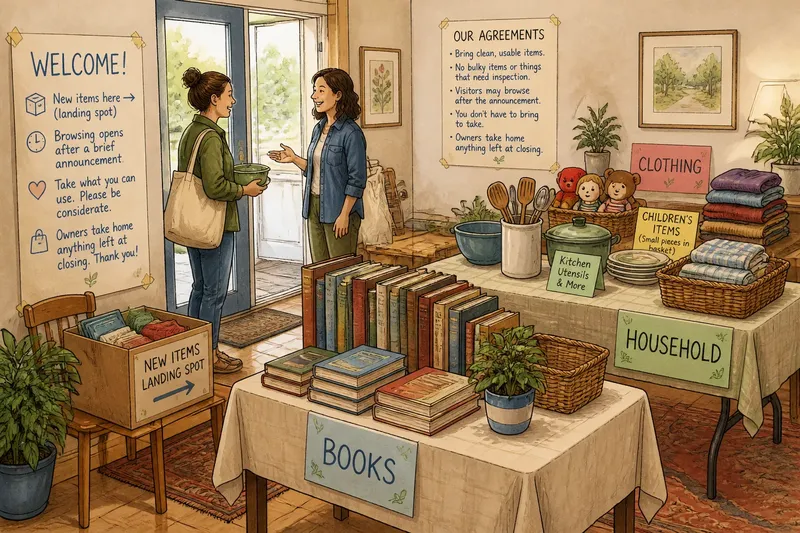
A box of novels lands beside the front door just as two neighbors arrive with kitchen goods. For a low-key swap afternoon, a readable welcome note and a clear place for each item can keep that busy entrance from becoming the whole event.
Use the room and supplies already available, and settle the rules before anyone starts unloading. The goal is a shared space where visitors can understand what belongs, what they may take, and what happens to anything left behind.
How can you arrange the room without blocking it?
Look at the room’s ordinary furniture before borrowing or moving more. Keep the entrance, exits, and a comfortable walking route clear; if another folding table would pinch the browsing area, leave it out.
Set one landing spot for incoming items, apart from the browsing surfaces. A marked corner or spare chair can work while someone sorts. If there is no spare spot, ask arrivals to bring manageable bags or boxes and place items directly into their sections.
Keep objects on clean, stable surfaces where possible. Avoid tall stacks that hide items or force visitors to move one group to reach another.
How should you sort and label the items?
Choose broad categories that fit what neighbors are likely to bring: books, clothing, kitchen items, or children’s supplies. Write each category on paper or a reusable card and place the sign at the start of its section.
Use a smaller note only when a particular item needs explanation. For instance, a board game card might say that its pieces have not been checked. Make a visible flaw or missing part clear rather than implying the item is complete.
Be ready to adjust as items arrive. If only a few kitchen goods show up, they can share a household section; if clothing fills the table, give it more room. Matching signs and decorative tags are not worth the effort if a plain, legible label already tells visitors where to look.
What should the invitation and welcome note say?
Write a short invitation that names the kinds of items the group can accept and asks people to bring clean, usable things. Say in advance if the event cannot handle bulky items or anything that needs special inspection. For product-specific safety questions, follow the item’s label or manufacturer guidance and local rules.
At the entrance, post where new items go, which sections are open, when browsing begins, and the take-home arrangement. Ask a host to greet arrivals and point out the categories. A visitor should not have to guess whether browsing is open or whether an item belongs in the pile.
If an item falls outside the group’s stated scope, explain that plainly and ask its owner to take it home. Do not leave uncertain items behind for a later volunteer to sort out.
What if visitors arrive at different times or feel unsure?
Decide whether people may browse as soon as they arrive or only after a shared opening moment, then state that rule in the invitation and welcome note. If visitors may browse immediately, keep the incoming-item spot separate from the open sections.
Some people may wonder if they must bring something to take something. Agree on the policy beforehand and state it without asking anyone to explain their circumstances. A clear rule makes the exchange easier to join.
How should the group handle the questions visitors ask?
Can visitors take an item without bringing one?
That depends on the group’s agreed arrangement. State the rule in the invitation and welcome note so nobody has to infer it from what other visitors do.
Should children’s items have their own section?
Use a separate section if it makes the items easier to browse; otherwise, put them under a clearly named general category. Keep small pieces together in a clean box or basket.
Which supplies should you set out?
Start with available tables or surfaces, paper, pens, tape, category signs, and a few boxes or baskets for sorting. Ask visitors to bring their own bags if convenient rather than buying special packaging.
Who decides what happens to leftovers?
Name the person who will follow the agreed plan, but do not make that person the automatic owner of unclaimed goods. If no recipient or storage arrangement is confirmed, ask owners to take their remaining items home.
How do you make the leftover plan clear?
Choose the arrangement before the event and include it in the invitation. Options include asking owners to reclaim what remains, letting visitors take suitable leftovers, or arranging in advance with a local organization that has agreed to receive them.
Do not promise a donation unless the recipient has confirmed it can accept the items. If owners must collect their belongings, say so plainly and agree on where any items awaiting pickup may be kept. Avoid a plan that assumes one volunteer will carry everything away.
Say you have a box of novels and one kitchen utensil, and the room has a book table plus a small household section. The host places the novels with the books, puts the utensil in the household section, and points arrivals to the welcome note, which says browsing opens after a brief announcement and owners take home anything left at closing. Visitors can follow the same arrangement, and the host knows which items still need to leave with their owners.
How can you close the room without leaving a new chore?
At closing, gather signs and supplies, return borrowed furniture as agreed, and sort remaining items under the announced plan. Ask another volunteer to check the floor and surfaces and account for anything borrowed.
Follow the shared room’s posted closing arrangements. The aim is not to leave a venue spotless at any cost; it is to avoid loose objects and an unexplained pile for the host.
A low-key swap afternoon stays manageable when visitors know where to begin and each leftover has an agreed destination or owner. Before the next gathering, keep reusable signs and sorting boxes together so the group can find them without another supply run.