The Shared Table: Why a Familiar Surface Helps a Gathering Find Its Shape
A shared table gives an informal gathering a natural place to pause, exchange useful information and shift between conversations without forcing a schedule.
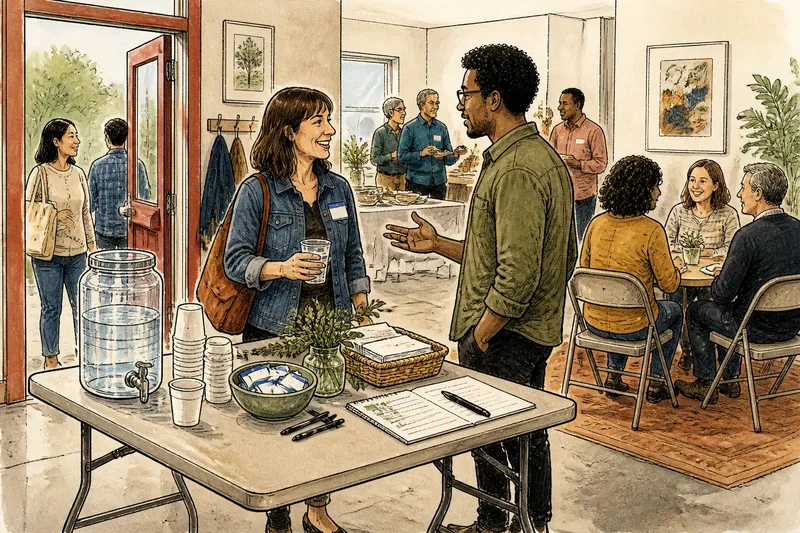
At a neighborhood potluck, someone sets a jug of water and a stack of paper cups on the folding table by the door. A guest who has just arrived pauses there, spots a familiar face, and asks where to put the salad. Before long, two people are talking beside the cups while others decide whether to join them or find a seat. A shared table can give an informal gathering a place to begin, pause and change direction.
The useful idea is not that every event needs a centerpiece or a formal agenda. It is that a visible, common surface can make the group’s next small action easier to read. Choose a focal point that fits the gathering’s purpose, then keep it useful enough that people can approach, leave and return without asking for permission.
What should the shared table do?
Start by naming the moment that needs a little help. Guests may need somewhere to set food, newcomers may need an easy first stop, or a group may need a place to check what is happening next. One table can support several of these needs, but it helps to decide which one matters most.
Think of the surface as a landmark, not a stage. It gives people a common reference point: “The cups are by the entrance,” or “We’ll leave the question cards on that table.” Once people know where to look, they can orient themselves without the host repeating directions throughout the gathering.
A focal point works best when its purpose is obvious from its contents and location. A bowl of name tags suggests arrival; a tray of shared snacks suggests taking one; a simple map beside a sign-in sheet suggests useful information. When items have unrelated purposes, people may hesitate because they cannot tell what is for general use and what belongs to someone.
Which setup fits your gathering?
Choose the arrangement for the social task, not for appearance alone. A crowded table can draw attention while making it hard to use; a bare one may be easy to approach but offer no reason to stop. These situations can help you decide what belongs there.
If guests are arriving at different times, what fits?
Use a small welcome point near the natural entrance, with a clear place for name tags, a simple note about where to put coats, and one person nearby who can greet newcomers. Keep the route through the doorway open, and avoid making people fill out a form before they can join the gathering. The table should answer the first practical questions, then let guests move on.
If people will bring food or supplies, what fits?
Make a landing surface close to the serving area, but separate the roles: one section for items people contribute, another for cups or utensils, and a clear route for serving. A handwritten card can help if it clarifies a real choice, such as whether a dish is for everyone or reserved for a particular group. Skip elaborate labels when people can see what to do at a glance.
If the gathering is mainly for conversation, what fits?
Place a modest focal point at the edge of the main seating area rather than in its center. A shared notebook for collecting suggestions or a small bowl of conversation prompts can give people a reason to pause without requiring everyone to take part. Keep the table low-key so it supports conversation instead of turning every exchange toward an announcement.
If the group needs to make a decision, what fits?
Use the table to hold the materials people need to consider the question, such as a large-print copy of the proposal, blank cards for comments or a simple map. Put the decision process into spoken words as well: say what is open for discussion and when the group will decide. The surface can keep relevant materials visible, but it cannot replace a clear invitation to contribute.
Where should you put the focal point?
Look at how people will move through the space before choosing a spot. The entry is often useful for arrival information, but it may become congested if everyone must stop there. A side wall can make a good home for a welcome table, while a central serving area may suit a meal where people naturally circulate.
Keep the most-used route clear: the path from the entrance to seating, from seating to food, or to a restroom or exit. Don’t place a table where someone has to reach across a conversation or squeeze past a line to use it. If the venue has access needs or specific room rules, follow the host’s directions and arrange the surface so people can approach it comfortably.
Consider sightlines, too. A table hidden behind a door or tall stack of chairs is not a reliable landmark. At the same time, the focal point need not dominate the room; being easy to spot from the entrance or main seating area is usually enough.
How can a table help people move between conversations?
People often use small tasks as a natural reason to enter or leave a conversation. Refilling a water pitcher, picking up a name tag or checking a note can offer a low-pressure pause. The surface gives those movements a shared destination, so someone can step away without making a formal announcement or interrupting another group.
It can also bring separate conversations into gentle contact. Someone who stops to read a community update may meet a neighbor doing the same; a person carrying serving plates may ask where they belong. These moments are openings, not obligations. Don’t assign an activity to every guest or treat a quiet person’s pause as an invitation to draw them into a discussion.
If the room has several conversation clusters, keep the common table accessible from the edges rather than surrounding it with chairs. A few people can gather there briefly without blocking others from reaching the supplies. For longer discussion, invite the group to sit elsewhere so the focal point remains available to newcomers and people moving through.
What belongs on the table, and what does not?
Put out only what supports the gathering’s intended use. Too many objects compete for space and make it harder to tell which ones are shared. A neat arrangement can be as simple as one sign, a few practical supplies and enough clear surface to set down an item.
- Arrival: Name tags, pens and a short welcome note, if people need them to get oriented.
- Food: Serving utensils, napkins or a card that clarifies how a dish is shared.
- Conversation: A small prompt card or notebook, only if it helps people take part naturally.
- Information: One current, easy-to-read notice that is relevant to this gathering.
- Return or cleanup: A clearly marked spot for reusable cups, dishes or borrowed supplies.
Skip the decorative centerpiece if it takes up the usable area or blocks sightlines. It is also not worth the effort to create a complicated display that needs constant tending. A clear surface and a visible purpose do more for a gathering than careful styling that people are afraid to disturb.
How can you make the setup welcoming without making it compulsory?
Use language that offers choices. “Help yourself to a name tag” feels different from a sign implying that everyone must complete a task. If people can join the gathering without writing, signing or taking a prompt card, the table remains an invitation rather than a checkpoint.
Make shared items easy to identify and personal items easy to leave alone. A basket marked “take one” can clarify that its contents are available; a tray labeled “please leave here” can keep someone’s belongings from being mistaken for supplies. If the group is small, a quick verbal explanation may be clearer than a collection of signs.
For a discussion table, offer more than one way to participate. Someone might speak, write a comment, listen, or talk with a neighbor afterward. Avoid placing private contact details or sensitive notes in a public view. A gathering’s focal point should help people find their footing without exposing information they did not intend to share.
What should you do when the room or group changes?
Let the setup change with the gathering. If the arrival rush has passed, clear away unused name tags and move the welcome note so it no longer occupies the busiest spot. If conversation has shifted to a shared question, bring the relevant materials into view rather than leaving them buried under serving dishes.
One person can keep an eye on the surface, but it need not become a permanent job. Before the gathering, agree on who will place the supplies and who will return borrowed items afterward. During the event, intervene only when the table is confusing, blocked or running short of something people genuinely need.
Say you are hosting a casual neighborhood meal in a room with a narrow entrance and a wide wall beside the chairs. Put name tags and a welcome note on a small surface near the wall, then place food on a separate serving table farther inside. Guests can pause to orient themselves without blocking arrivals, and later the welcome surface can hold a notebook for anyone who wants to leave a suggestion. The expected visible result is a clearer path through the entrance and a focal point that changes purpose as the gathering changes.
What questions help you choose the right setup?
Does every gathering need a shared table?
No. If people already know where to go and the room has an obvious place for shared items, adding a table may create clutter. Use another clear landmark, such as a wall sign or a host near the entrance, when that better fits the space.
Should the table sit in the center of the room?
Usually, a center position is useful only if people need to gather around it together. For arrivals, supplies or informal conversation, an edge location often leaves circulation clearer while keeping the surface easy to find.
What if nobody uses the materials?
Remove or simplify items that have no clear purpose, then check whether the table is easy to notice and approach. If the need was only assumed, ask the group what would help next time rather than adding more objects.
Can one table serve more than one purpose?
Yes, if the uses are compatible and people can tell what to do with each item. Keep arrival materials apart from food service, for instance, and change the arrangement once the first purpose has passed.
How do you know the focal point is doing its job?
Watch for practical signs, not a particular level of activity. Can a newcomer find the welcome information without stopping the host? Can someone reach the shared supplies without cutting through a conversation? Do people use the surface and move on freely, rather than waiting for instructions? Those observations can tell you whether the location and contents make sense.
Afterward, ask one or two simple questions: Was anything hard to find, and did the table get in the way? Adjust one feature for the next gathering, such as moving it away from the doorway or reducing the number of items. A shared table should respond to the room and the people in it, not become a fixed ritual.
The shared table earns its place when it makes a gathering easier to enter and easier to move through. Keep its purpose visible, leave room for people to approach it on their own terms, and let the setup change as the conversation changes. A useful focal point does not tell neighbors how to gather; it gives them a place to meet for a moment and decide what comes next.