The Volunteer Sign-Up Myth: Why One Open Call May Not Be Enough
A volunteer sign-up works better when the task, timing, and limits are clear, so neighbors can choose useful help without guessing what they are agreeing to.
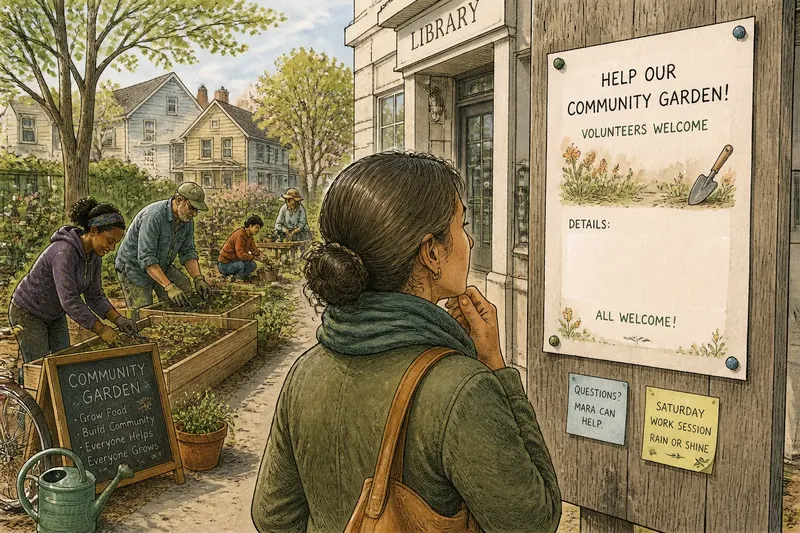
A neighbor notices a flyer outside the library asking for garden volunteers, then pauses at the blank space where the details should be. A useful volunteer sign-up names the work, its boundaries, and how to respond; “everyone welcome” alone leaves too much to guess.
A friendly open call can still be hard to answer. People need enough information to decide whether the task fits their time, abilities, and interest—and to know that offering help will not quietly commit them to more.
What makes an open call hard to answer?
“Help with the garden” might mean carrying soil, watering, sorting supplies, or taking responsibility for the whole plot. Someone who can help once may stay away if the invitation sounds like a request for regular shifts or committee work.
Describe a task someone can picture doing, rather than asking people to prove their commitment. Include practical details that affect the decision, such as the location, schedule, physical demands, and whether experience is needed.
What should a volunteer sign-up say?
Use ordinary language and cover the essentials: the action, where and when it happens, the expected commitment, and who can answer questions. State what equipment the group will provide and whether a brief visit is welcome.
For instance, “Sort donated seed packets into labeled trays in the library community room during Saturday’s work session. Drop in for part of the session; no gardening experience is needed. Mara will show you where to start, and the group has labels and markers.” This gives a prospective helper a task and a stopping point.
Before sharing the invitation, check the plan itself. If nobody has agreed to host or the time is unsettled, resolve that first; otherwise, a clear-sounding notice can still leave volunteers stranded.
How can you set expectations without overexplaining?
Be explicit about what saying yes does and does not mean. Say whether sign-up reserves a place, whether the host will send a reminder, and how to cancel. If the task is part of a larger project, distinguish helping with the agreed work from making decisions or taking on future maintenance.
Use these checks before posting. For each item, look for the stated detail and follow the decision that fits:
- Task: If the notice names a concrete action, keep it; if it only says “support the project,” replace that phrase with the work volunteers will do.
- Time and place: If both are settled, publish them; if either is uncertain, confirm it before inviting people.
- Commitment: If a one-time visit is welcome, say so; if recurring help is needed, state the schedule and ask for that commitment directly.
- Supplies: If the group provides tools or materials, list them; if volunteers must bring something, name it and offer an alternative where possible.
- Physical demands or skills: If the task requires lifting, standing, or prior experience, describe that plainly; if it does not, avoid implying unnecessary qualifications.
- Decision boundary: If volunteers only carry out an agreed task, say who makes wider project decisions; if they are being asked to help decide, explain how that discussion will happen.
- Full capacity: If the task can take everyone who responds, keep sign-ups open; if places are limited, explain how you will respond to extra offers and what alternatives are actually available.
It is not worth writing a long pitch or inventing a menu of roles before the group knows what work needs doing. A few accurate details help more than a grand promise of involvement.
How should the group handle replies and changes?
Choose one person to acknowledge sign-ups and answer practical questions. A short confirmation can repeat the task, location, and expected commitment, then give the volunteer a simple way to say plans have changed.
Use a paper sheet or direct message if that is enough to coordinate the activity. Ask only for information needed to organize the work; do not collect personal details that have no bearing on the role.
If the plan changes, contact the people who signed up rather than relying only on a public notice. Say whether the activity is postponed, canceled, or moving to a new time, and explain what happens to their offer of help.
What questions do neighbors ask before signing up?
How specific should a volunteer request be?
Name the action, place, timing, and expected commitment. Mention relevant skills or equipment, but do not add requirements the task does not need.
Can someone volunteer just once?
Say plainly whether a single visit is useful. If the group needs recurring help, state the schedule and ask directly instead of hiding that expectation in a broad call.
What if more people volunteer than the task needs?
Thank each person and explain that the immediate need is covered. Offer another task only if one is available, and ask permission before keeping someone’s contact details for a future request.
Should volunteers bring their own supplies?
List any required items and say what the group can provide. If volunteers can participate without personal tools, make that clear so they do not have to guess.
How does a complete invitation guide the decision?
Imagine a neighborhood group arranging a book-room tidy. The starting point is a shelf-labeling task, an announced work session in the room, and a host who can show volunteers where to begin; the group has markers and labels, and it welcomes short visits.
The organizer writes an invitation naming those details and states that volunteers will label shelves, not plan the whole room or sign up for future shifts. A neighbor who has only a brief opening can now decide to attend for part of the session, while someone seeking an ongoing role can see that this task does not offer one. The expected result is a clearer choice for both people and a better match between the offer and the work.
A volunteer sign-up succeeds when neighbors can tell what they are accepting and what remains optional. Make the task and its limits visible, and leave people room to choose a useful level of participation.